
I’ve been through enough value engineering meetings to know they’re not optional. Construction costs rise, financing changes, and projects that once penciled suddenly need trimming to make it to closing. Value engineering is how we keep deals alive.
The problem isn’t that we do it. It’s when and how we do it.
The Unavoidable Reality (and the Timing Problem)
Let me be clear: Value Engineering is absolutely an essential step in the development process. No development makes it to closing with the initial pro forma entirely intact. Markets shift, construction costs spike, supply chains seize up, and financing terms tighten. If we didn’t value-engineer, very few projects would ever break ground.
But here’s what bothers me most: this process almost always happens under pressure. We’re weeks from closing, the construction loan needs to fund, and VE becomes a frantic exercise in finding cuts to hit a number rather than a thoughtful recalibration of priorities. When time is the enemy, decision-makers resort to the quickest, most quantifiable savings, and unfortunately, character elements often fall into the “non-essential” category on a spreadsheet.
The pressure cooker environment means we default to the path of least resistance. It’s easier to swap a material specification than to rethink a floor plan. It’s faster to eliminate architectural details than to negotiate with a different subcontractor. We optimize for speed and certainty over outcome.
Where Character Goes to Die
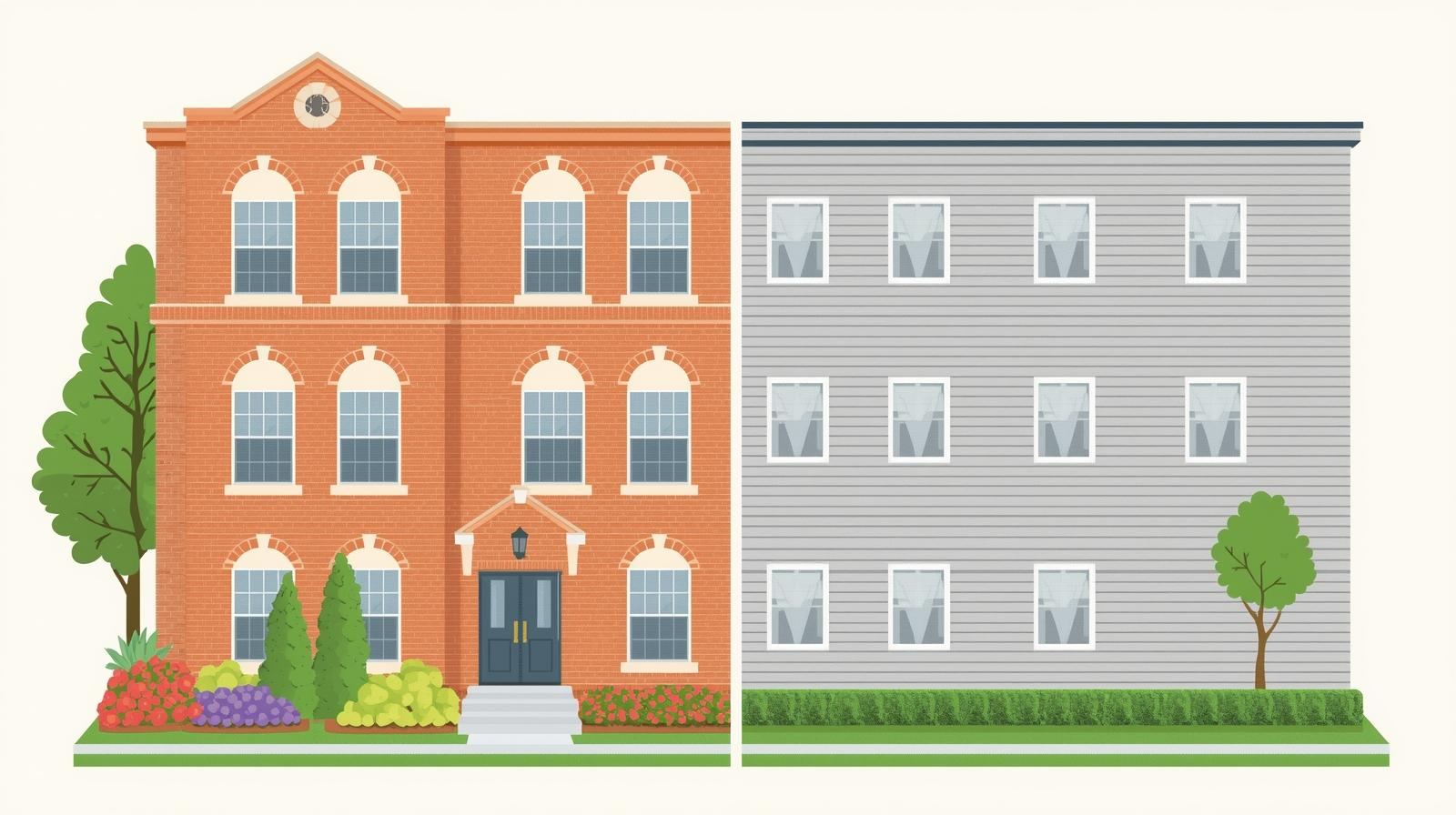
If you’ve been through a few of these meetings, you know exactly what gets cut. The proposed blend of brick and natural stone becomes vast expanses of vinyl siding. Those dark bronze windows that would have added visual depth? Now they’re uniform white vinyl. The ornamental details that break up the façade and give the building rhythm get eliminated because they require a specialized craftsman or an extra day of installation time. That extra amenity space that was truly unique to your building is slashed.
Then there’s landscaping. The thoughtful planting plan with mature trees and native species that would provide shade, filter stormwater, and create an immediate sense of place gets stripped down to the municipality-required minimum. A few foundation shrubs, some annual color, and call it done. Inevitably, a year after opening, management realizes the landscaping isn’t doing anything for the community and starts adding it back, but by then you’ve already set the tone.
Window sizes shrink. Quality gets downgraded. Each change seems reasonable in isolation. We’re often talking about relatively modest line items in the context of a multi-million dollar project. But cumulatively, they transform a building from something that contributes to the streetscape into something that simply occupies space.
The True, Unseen Costs
The irony is that these decisions may cost us more than we save:
Genericization: A building that looks like every other apartment complex built in the last five years becomes forgettable. Drive through any growing market and you’ll spot them: competent buildings that are technically well-built and functionally sound, but utterly forgettable. Buildings that could be anywhere. A visually distinct, character-rich building attracts attention and commands higher rents more reliably than a generic box, no matter how nice the interior finishes are.
Increased Neighborhood Friction: Communities don’t resist “housing”; they often resist “cheap-looking infill.” When a developer slashes the budget for exterior materials, the project suddenly feels like an intrusion rather than an enhancement, leading to lengthier, more contentious zoning and planning board hearings, which cost real time and money. Thoughtful use of materials and design acts as a good neighbor.
Slower Lease-Up: Buildings with character and contextual sensitivity tend to lease faster and command rent premiums. They generate resident pride and longer tenures. Renters are increasingly design-conscious. They might not articulate why one property feels better than another, but they sense it. Genericity signals deferred maintenance or lower quality, creating subtle friction in the leasing process.
Long-Term Value Erosion: Generic materials weather faster, flat façades offer no rhythm, and short-term savings are replaced by higher maintenance and weaker perception of value.
More broadly, we’re building the fabric of our communities. These buildings will be here for decades. When we strip away elements that create visual interest, pedestrian engagement, and neighborhood fit, we’re not just saving money on one project; we’re degrading the quality of place for everyone who lives, works, or passes by.
Doing It Better
Every project has limits. Lenders, investors, and markets have thresholds. But we can handle VE more intelligently, in ways that protect both budgets and design integrity:
Start VE Early and Holistically: Make cost-saving a foundational part of the design process, not a panicked reaction to a closing date. If we know budget pressure is coming (and we always do), integrate value engineering into design development. Look at massing or unit mix first, before defaulting to cutting the brick veneer. This creates space to make thoughtful tradeoffs rather than emergency cuts.
Identify Non-Negotiables Upfront: Before the pressure hits, define which character elements are essential to the project’s success and integration with the community. Maybe it’s the street-facing material palette, the rhythm of the fenestration, or the landscaping along the public sidewalk. Codify these as no-cut zones and make cuts elsewhere.
Think in Systems, Not Line Items: Instead of asking, “Can we afford this siding?”, ask, “What is the long-term maintenance cost difference between the high-quality option and the cheaper alternative?” Sometimes a more creative redesign can save money while preserving character. Could a simpler building form allow for better materials? Could rethinking the unit mix create savings that protect the exterior design?
Engage the Community Early: Understanding what neighbors value about their context can help us prioritize. Is it materiality? Scale? Relationship to the street? This collaborative transparency builds goodwill and surfaces design cues that make a project feel local. Sometimes the community’s priorities align with yours more than expected.
The Larger Question
Ultimately, this comes down to how we define value. Yes, we need projects to hit return thresholds. Yes, we answer to investors and lenders with legitimate expectations. But the best developers I know defend design with data. They prove that good design drives faster lease-ups, higher retention, and stronger returns. Quality isn’t a luxury but a competitive advantage.
Developers are place-makers, whether we embrace that role or not. The multifamily projects we deliver today become the built environment of tomorrow. Each decision to swap brick for vinyl or eliminate architectural relief is a small choice in isolation, but collectively these choices shape whether our communities feel like places worth caring about or just inventory to be filled.
I don’t think we necessarily need to choose between financial discipline and good design. But I do think we need to be more intentional about where we make compromises. Value engineering shouldn’t be a last-minute scramble that defaults to cutting whatever’s easiest. It should be a strategic process that protects what matters most while still delivering financially viable projects.
When VE is done thoughtfully, it strengthens projects. It clarifies priorities and ensures every dollar adds value. Done well, it’s not about cutting; it’s about refining. Done carelessly, it erases the very things that make our work meaningful.
We can do better, we should do better, and I think our projects, our residents, and our communities will all benefit when we do.
At Scholhamer Research & Advisory, we help developers and investors think through these tradeoffs before they become last-minute crises. Whether it’s market positioning, design strategy, or making the business case for quality, we work to ensure your projects deliver both financial returns and lasting community value. If you’re wrestling with how to balance the spreadsheet with the streetscape, let’s talk.