
For years, developers treated retail space as a financial engine: lease it, collect rent, and let it carry its weight on the P&L. But as the retail landscape continues to evolve, the smartest multifamily developers are taking a different approach: using retail as a value driver rather than a profit center.
Retail as an Amenity, Not an Obligation
Ground-floor retail has always been a natural pairing with mixed-use development, but what’s changing is how that space is programmed. Instead of chasing the highest-paying tenant or waiting for a national chain to anchor a corner, developers are intentionally curating operators that reflect the character of the property and appeal to residents’ daily lives.
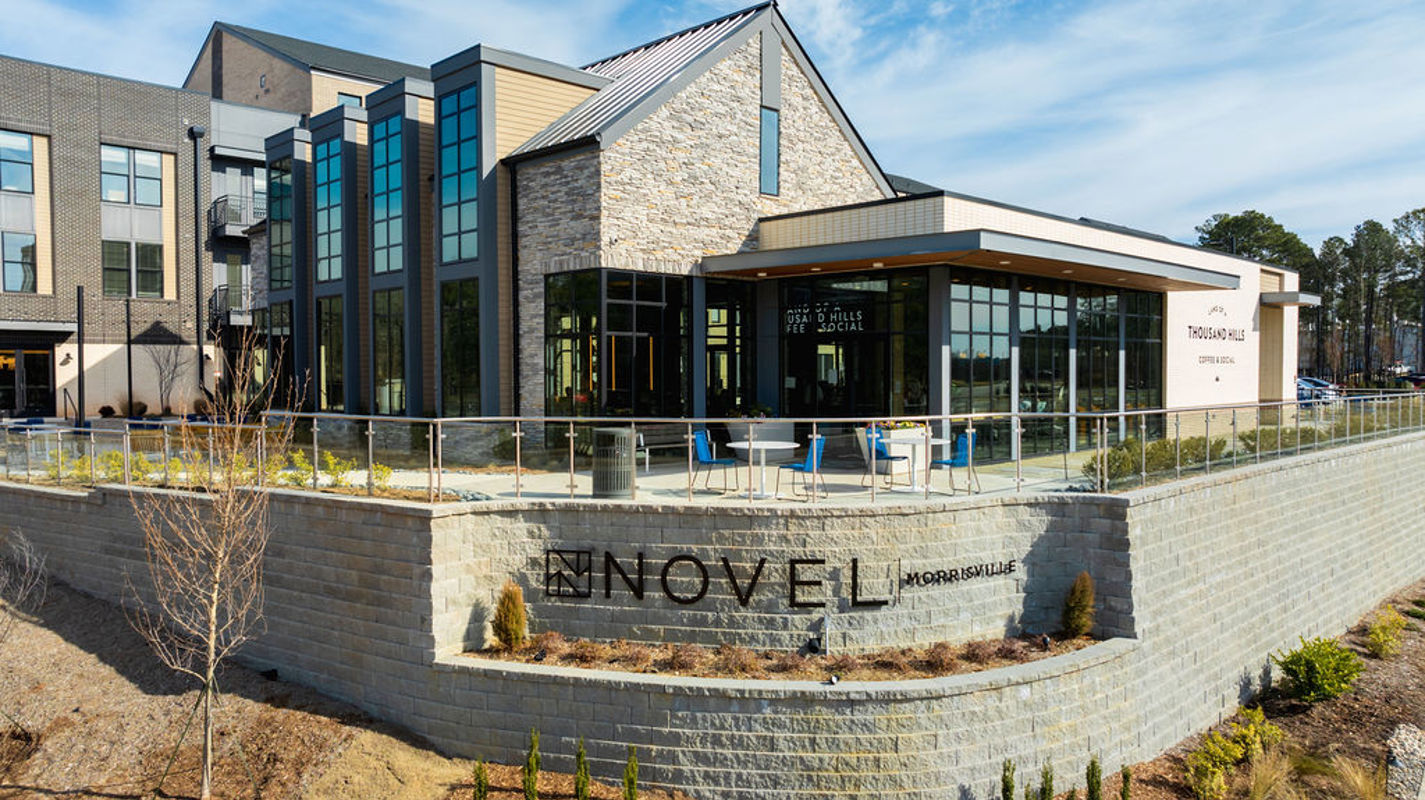
A great example of this concept is the partnership between Crescent Communities’ NOVEL brand and Land of A Thousand Hills Coffee, which I got to experience first-hand during my time with the Crescent development team. The coffee and social concept has opened locations at a dozen-plus NOVEL locations spanning from Utah, through Texas, Atlanta, North Carolina, and up into Washington DC. These coffee shops aren’t afterthoughts or revenue plays. They’re part of the identity of the property, integrated into the design of the building from the start, giving residents a place to start their day, meet neighbors, and connect with their community. The locations function as live-work-play environments, naturally transitioning from a café and workspace during the day to a lounge and social spot in the evenings.
What makes the partnership sustainable is that both sides win: Crescent gets a turnkey amenity that enhances the resident experience, often in suburban locations where traditional retail might not pencil. Meanwhile, Land of a Thousand Hills benefits from slightly reduced startup risk and immediate access to a captive audience, allowing them to expand their footprint without the typical barriers to entry
For suburban sites in particular (take NOVEL Morrisville for example), this approach fills a gap. When the closest café requires getting in the car, having one downstairs creates real convenience and differentiation — something most renters will pay for, even if it’s not a line item on the rent roll.
Further, these integrated retail spaces do more than just provide a unique amenity to the property. In an incredibly competitive leasing market where concessions are rising and leasing velocity is slowing, driving potential residents to your property is not an easy task. By creating a space where people naturally want to check out, you are getting them on site and letting them see themselves living on property before even speaking with a leasing agent.
How to Underwrite Retail the Right Way
Retail strategy starts long before the leasing stage, it begins in the underwriting. There are a few ways to look at it, depending on your project scale and goals:
1. Whitebox and Sell
If your project has enough retail square footage (typically 10,000+ SF in urban infill), it may make sense to build and whitebox the space, then sell it to a retail investor or developer. This approach simplifies your hold and keeps your multifamily pro forma clean, though you lose long-term control over tenant mix.
2. Underwrite as Retail Space
In some cases, you may want to include retail in your model as a traditional income-producing component, accounting for tenant improvement packages, downtime, and realistic rent assumptions based on annual rent per square foot. While this can boost project IRR, it often introduces complexity and risk, especially in secondary or suburban locations where retail demand is thinner.
Commercial leasing requires unique expertise that is costly, with special capital expenditure requirements to build spaces to tenant specifications, and retail units can stay vacant for long periods. Lenders have also become more cautious about financing and underwriting the commercial portion of mixed-use projects, particularly in the post-pandemic environment.
3. Underwrite to Cost Only
My preferred approach for many multifamily developers is to underwrite retail at cost only, without relying on rent or sale proceeds to make the deal pencil. This ensures the multifamily component stands on its own merits, while the retail serves as a value-add for absorption, rent premiums, and long-term appeal. If you later lease or sell the retail, it’s just upside.
When incorporating retail into development models at cost, developers should account for tenant improvements and leasing commissions in the construction budget as soft costs, allocated at the end of the construction term.
The Broader Shift: Placemaking Meets Financial Modeling
We’re in a moment where placemaking has become part of the financial model, not just the design conversation. Developers are looking to expand their anchor search beyond the traditional core property types of office and retail to such alternatives as entertainment, sports, health care, universities, parks, and green space, creating magnets and heartbeats for mixed-use projects.
A thoughtfully programmed retail space, even if it’s just a coffee shop, yoga studio, or wine bar, can help activate a project, accelerate lease-up, and strengthen long-term performance. Successful mixed-use projects are highly synergistic, and on a price-per-square-foot basis, valuation and underwriting account for the short- and long-term benefits of the multiple uses within the property, meaning successful mixed-use projects tend to be in high demand from investors and trade at strong price levels.
The Bottom Line
It’s a subtle shift from “What can we charge for?” to “What will make this place thrive?” And in today’s competitive market, that distinction can make all the difference. The Crescent Communities-Land of a Thousand Hills partnership demonstrates this strategy in action across multiple markets, showing that when executed thoughtfully, retail-as-amenity creates genuine community value while maintaining financial discipline.
If you’re exploring retail integration in a new development, Scholhamer Research & Advisory can help you evaluate market demand, model retail strategies, and ensure your deal stands on solid ground — with or without retail income.